
How bamboo charcoal bags work
No scent, no spray, no chemicals. Just a very porous material that holds on to odor. Here is how it works and how to get the most from it.
What is activated bamboo charcoal
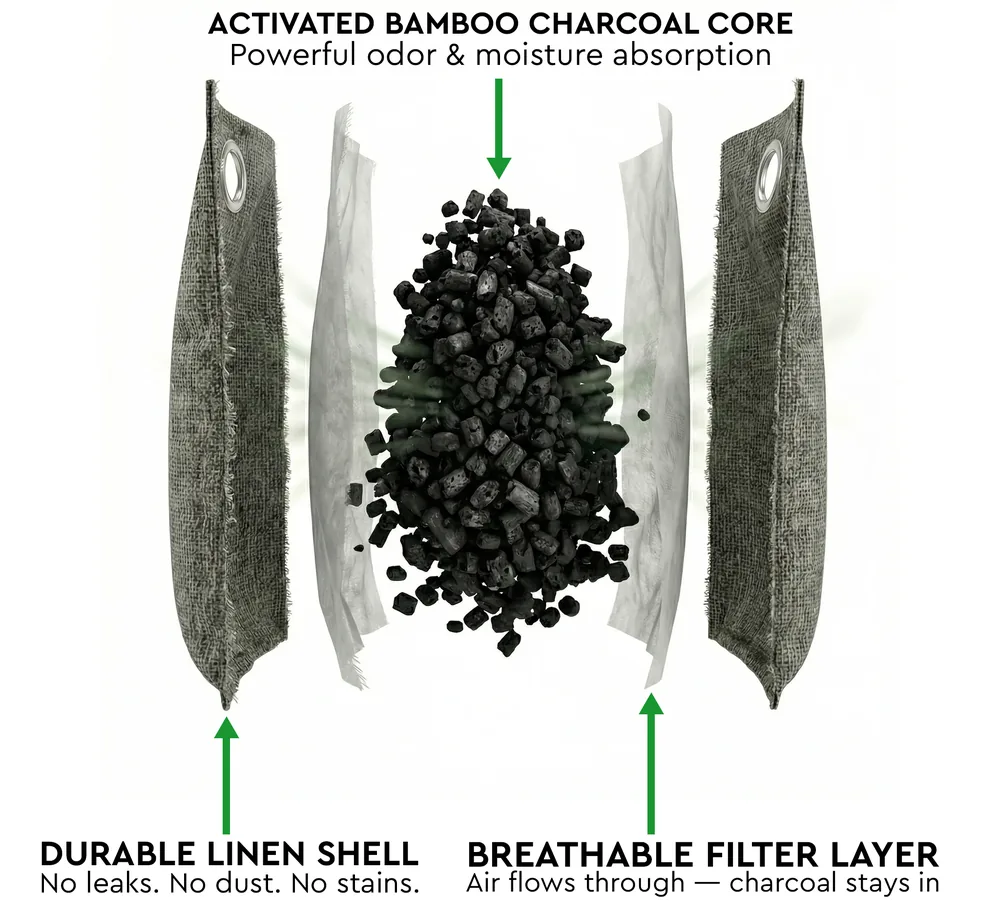
Activated bamboo charcoal is highly porous. Its huge network of tiny pores is what makes it useful.
A small bag holds a surprising amount of surface area. That is the whole trick. More surface means more places for odor to land.
How it removes odor
The process is called adsorption. It is not the same as absorption, where a sponge soaks up water. In adsorption, odor molecules and moisture in the air stick to the surface of the charcoal and stay there.
As air moves past the bag, odor molecules are caught in the pores. The air that comes back out is cleaner. The charcoal does not release a scent of its own. Our bags are fragrance-free.
Moisture works the same way. Charcoal binds damp air too, which is why the bags suit closets, shoes and basements, where damp and odor tend to go together.
Think of it as a very small, very quiet filter. It has no fan, no battery and no refill. It simply sits where the air can reach it and keeps working, day after day, until it is full. Then a few hours in the sun resets it.
That is also why placement matters. A bag closed inside a box has no air moving past it. A bag hanging in the middle of a closet has plenty.
Charcoal removes smells. It does not mask them.
What the bags are good for
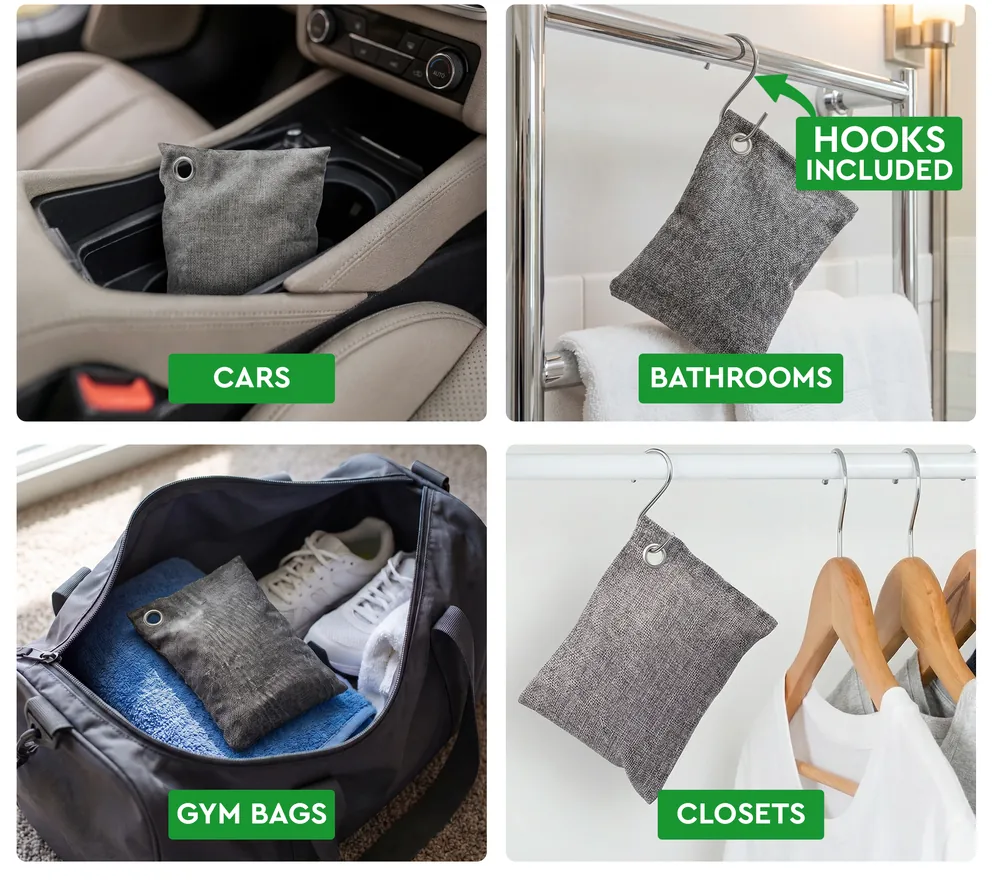
They work best in enclosed spaces, where the air stays still and the same smell builds up day after day.
- Closets and drawers
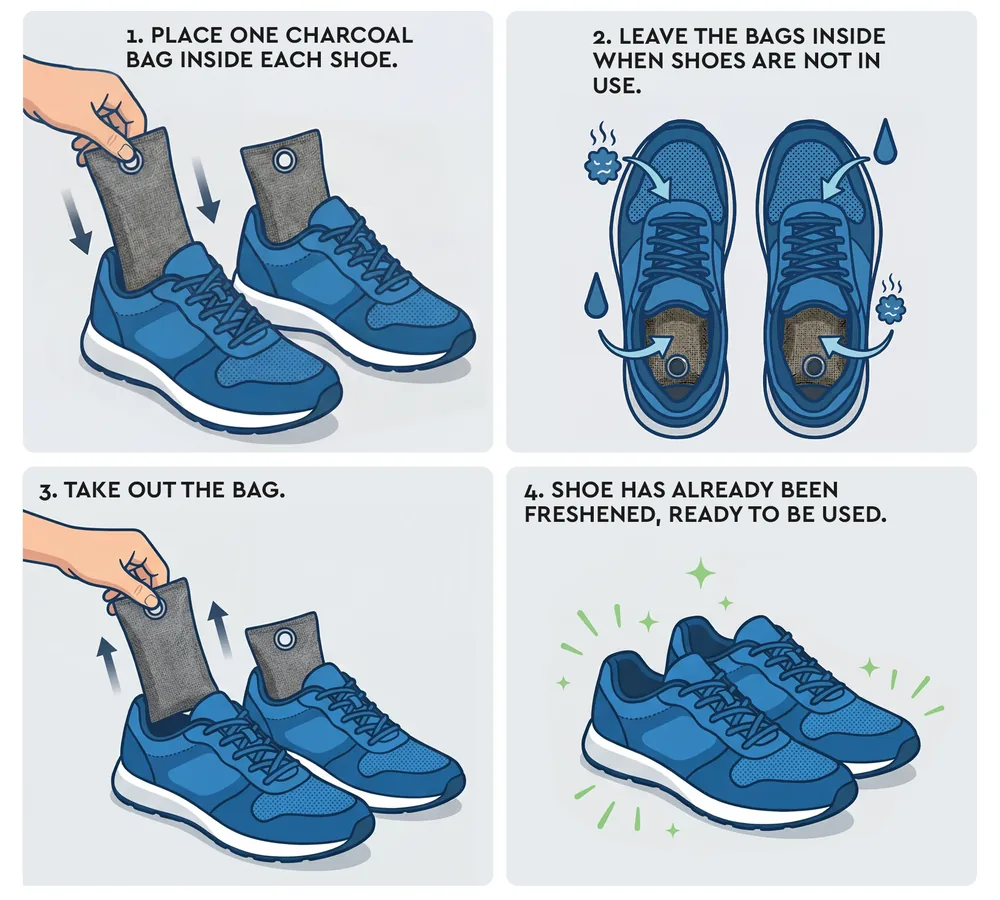
- Shoes, boots, cleats and gloves
- Gym bags
- Cars
- Basements and storage rooms
- Pet areas
The bags are natural, non-toxic and safe to use around children and pets.
The 10-pack suits closets, cars and gym bags. The shoe 6-pack has slim bags that slide into footwear. The 5-pack of large bags covers rooms and basements.
How to place them
Clean first. Remove the source of the smell, then wipe or vacuum the area. The bags handle what lingers after that.
Then place or hang the bags where air can reach them. Every pack includes S-hooks for hanging.
Use more bags for a bigger space or a stronger smell. Most people notice a difference 24 to 48 hours later. Cars usually take a few days.
How to recharge them
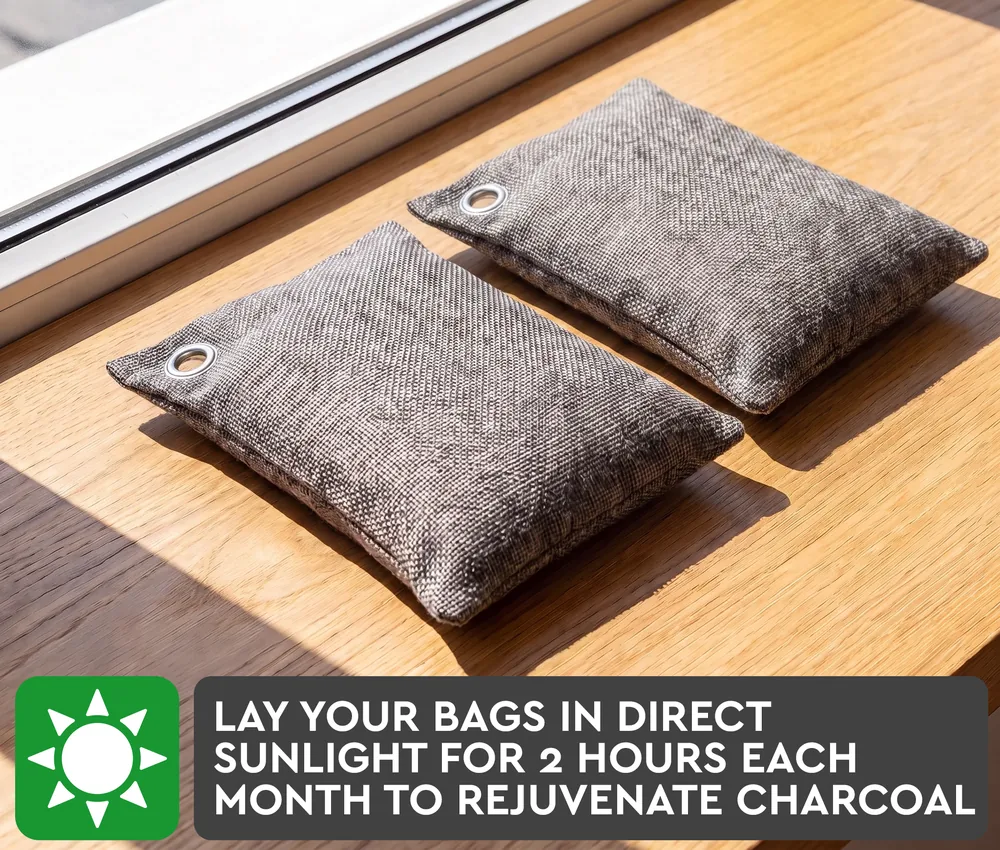
Charcoal fills up over time. To reset it, place each bag in direct sunlight for about 2 hours once a month. The sun helps release what the pores have taken in.
With monthly recharging, a bag lasts up to 2 years. New bags do not need charging first. They are ready to use straight out of the pack.
What the bags will not do
Charcoal will not add a pleasant scent. If you want your closet to smell like lavender, this is not that product.
It also cannot fix a smell whose source is still there. A damp towel, a leaky pipe or old food will keep making new odor faster than any bag can take it in. Find the source, deal with it, and let the bags handle what remains.
If a smell remains after a week, the source is probably still there or somewhere else. Clean again and add bags.
Need help with your bags? Visit charcoal bags support.